
2026 Chevrolet Silverado 1500 V8 Engines: 5.3L vs. 6.2L
The 2026 Silverado 1500 offers two V8 engines, and both are worth understanding before you configure your truck. The 5.3L EcoTec3 V8 and the 6.2L EcoTec3 V8 share the same basic architecture and 10-speed automatic transmission — but they produce different numbers, appear on different trims, and serve different priorities. For Saskatchewan truck buyers in […]
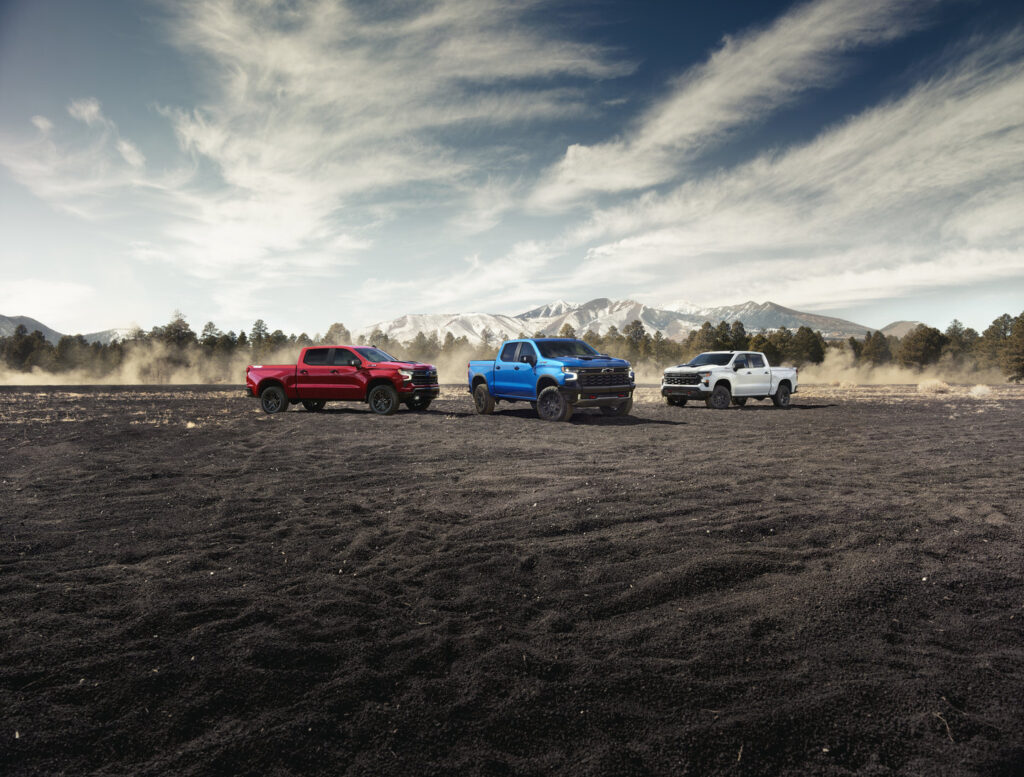
The 2026 Silverado 1500 offers two V8 engines, and both are worth understanding before you configure your truck. The 5.3L EcoTec3 V8 and the 6.2L EcoTec3 V8 share the same basic architecture and 10-speed automatic transmission — but they produce different numbers, appear on different trims, and serve different priorities. For Saskatchewan truck buyers in Saskatoon, here’s a clear breakdown of what each engine actually delivers.
The Numbers Side by Side
| Spec | 5.3L EcoTec3 V8 | 6.2L EcoTec3 V8 |
|---|---|---|
| Displacement | 5.3L 8-cylinder | 6.2L 8-cylinder |
| Horsepower | 355 hp | 420 hp |
| Torque | 383 lb-ft | 460 lb-ft |
| Transmission | 10-speed automatic | 10-speed automatic |
| Fuel Management | Dynamic Fuel Management | Dynamic Fuel Management |
| Auto Stop/Start | Standard | Standard |
The 6.2L produces 65 more horsepower and 77 more lb-ft of torque. Both engines use direct high-pressure fuel injection, Dynamic Fuel Management (which deactivates cylinders when full power isn’t needed), and an automatic stop/start system.
Towing: Where the Numbers Matter Most
With the Max Trailering Package, both V8 engines reach competitive towing figures in the Silverado 1500 Crew Cab 4×4:
The 5.3L EcoTec3 V8 in a Crew Cab 4×4 Standard Bed with the Max Trailering Package is rated at 11,000 lbs (4,990 kg) of conventional towing.
The 6.2L EcoTec3 V8 in a Crew Cab 4×4 Short Bed with the Max Trailering Package and 20-inch wheels is rated at 13,200 lbs (5,987 kg) of conventional towing — the highest conventional towing rating available on the Silverado 1500.
For Saskatchewan drivers who regularly haul grain trailers, campers, or large recreational loads, the 6.2L’s towing advantage is real and measurable.
- 5.3L Crew Cab 4×4 Std Bed, Max Trailering: 11,000 lbs (4,990 kg)
- 6.2L Crew Cab 4×4 Short Bed, Max Trailering, 20″ wheels: 13,200 lbs (5,987 kg)
Which Trims Offer Each Engine?
The 5.3L EcoTec3 V8 is the standard engine on the LTZ and High Country trims and is available on WT, Custom Trail Boss, LT, RST, and LT Trail Boss.
The 6.2L EcoTec3 V8 is available on RST (Crew Cab 4×4), LT Trail Boss, LTZ (4×4), ZR2, and High Country. It is not available on the base WT, Custom, or standard LT trim.
If your path to the 6.2L is the High Country, note that the 5.3L is the standard engine there — the 6.2L requires an upgrade selection at the time of configuration.
Fuel Economy
Both engines use Dynamic Fuel Management, which can run the Silverado in 4-cylinder mode under light loads to improve fuel efficiency. The 5.3L has a fuel economy advantage under typical mixed driving conditions. For drivers covering long distances across Saskatchewan’s open highways, the 5.3L’s lower fuel consumption can represent a meaningful difference over the course of a year.
The 6.2L’s fuel economy trade-off is the cost of 65 additional horsepower and the higher towing ceiling. For drivers who rarely tow near the 5.3L’s capacity and primarily use the truck for daily commuting, the 6.2L’s extra power comes with extra fuel cost that may not be justified.
Which Engine Fits Your Use?
Choose the 5.3L EcoTec3 V8 if:
- Your towing needs stay under 11,000 lbs (4,990 kg)
- Daily fuel efficiency matters across long Saskatchewan distances
- You want a lower entry point into a V8-equipped Silverado
- LTZ is your target trim
Choose the 6.2L EcoTec3 V8 if:
- You regularly tow near or above 11,000 lbs (4,990 kg)
- Maximum available horsepower (420 hp) and torque (460 lb-ft) matter to your use case
- You’re building a High Country or ZR2 and want every available performance advantage
- RST Crew Cab 4×4 is your target and you want the full power package
See Both V8 Options at Saskatoon Motor Products Chevrolet
At Saskatoon Motor Products Chevrolet in Saskatoon, our team can show you both engines in current inventory and walk you through the trailering specs for the exact cab, bed, and drivetrain configuration you’re considering. The right V8 depends on what you’re pulling and where you’re driving — let’s narrow it down together.